Most people picture match-fixing as a big match with a prearranged result. In reality, the rules of sport and the international convention on the subject reach much further. They apply to players, referees and officials, to team and individual sports, and to competitions at every level, from top divisions to regional leagues and youth competitions. Knowing what counts as match-fixing helps you recognise an approach in time and respond to it.
How the rules define match-fixing
The Council of Europe Convention on the Manipulation of Sports Competitions, known as the Macolin Convention, and the 2022 Olympic Movement Code on the Prevention of the Manipulation of Competitions use the same definition. Manipulation is an intentional arrangement, act or omission aimed at improperly altering the result or the course of a competition, in order to remove all or part of its unpredictability and obtain an undue benefit for oneself or for others.
Four things follow from that definition:
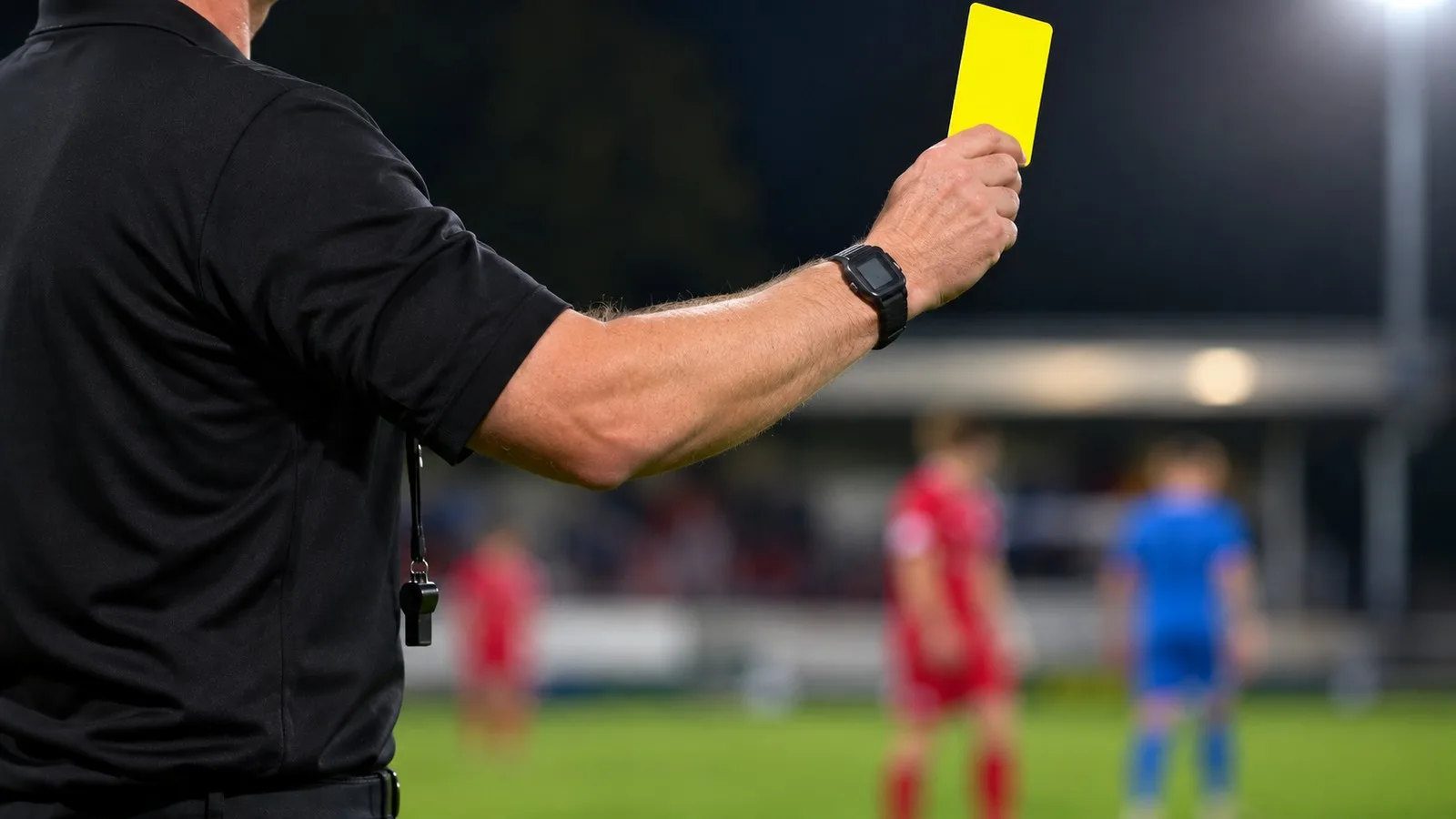
- It is not only about the result. The rules cover both the result and the course of a match. A deliberate yellow card, a deliberately conceded penalty, a game or set thrown on purpose, or a technical foul in basketball at an agreed moment all count as manipulation.
- It is not only about betting. The Convention expressly recognises that manipulation may or may not be linked to betting. Fixing for promotion, to avoid relegation or for a better draw is covered too, and the Olympic Movement Code states that a sporting advantage is also a benefit.
- An offer is enough. Offering, requesting or accepting a benefit in connection with a fix is already a breach. Under the Code, it does not matter whether the result was actually affected, whether the money arrived or how the bet turned out.
- Referees are included. The Convention and the Code count referees among competition officials, and the Code’s rules apply to them just as they do to athletes.
Whether match-fixing is also a criminal offence depends on national law. The Convention requires the countries that are parties to it to make criminal sanctions possible where manipulation involves coercion, corruption or fraud. A sporting sanction and a criminal prosecution are two separate proceedings.
What actually gets fixed
Betting monitoring data show that suspicious matches are only rarely about the final result alone. Across the 70 sports it monitors, the monitoring company Sportradar flagged 1,116 suspicious matches in 2025. According to its integrity report for that year, only about 10% of suspicious football matches involved the final result. More often they involved combined result scenarios (41%) or the number of goals (26%), and less often the winning margin or individual events within the match. The result itself does not have to change at all: a goal in a certain part of the match or a single card is enough.
In individual sports, the target can be a game, a set, whether a tennis game goes to deuce, or a frame in snooker. In professional tennis, the anti-corruption rules even make it an offence to deliberately delay or manipulate the entry of scores, for example by an umpire, because live scores feed betting markets.
Why fixers are interested in lower-level competitions
Europol’s 2020 report on organised crime and sports corruption explains why lower-level competitions are vulnerable: players earn less, few spectators attend, the media pay little attention and there is often no video footage. Yet these matches are offered on betting markets just like higher-level ones, players are easier to approach and bribes cost less. The same report says that manipulation involving youth athletes is in fact very frequent. According to the 2021 Global Report on Corruption in Sport by the United Nations Office on Drugs and Crime (UNODC), betting markets on smaller matches often exist only because data scouts send live updates straight from the venue.
A lower level does not always mean a higher risk, though. According to the same Sportradar report, the two highest domestic divisions accounted for 57% of suspicious domestic football matches in 2025. In tennis, by contrast, the 2024 annual review of the International Tennis Integrity Agency (ITIA) shows the most betting alerts coming from tournaments at the lowest professional level. The risk differs by sport, country and year.
The data also show how international the betting market is. According to UNODC, 92% of the basketball alerts and 84% of the football alerts recorded by the International Betting Integrity Association (IBIA) between 2017 and 2020 came from betting markets outside the country where the match was played. A small match in one country can attract bets from all over the world.
Team and individual sports: who gets targeted
In team sports, according to Europol, fixers target players in roles where a mistake raises no suspicion. In football, they are often goalkeepers, defenders and the captain, because a simple mistake can easily lead to a goal being conceded. More generally, a single player can deliver an individual event such as a card or a technical foul. A typical offer therefore sounds harmless, such as ‘just pick up a yellow in the first half’, and the player thinks the team will not be hurt.
In individual sports, one player or one umpire is enough to influence a match, which, according to Europol, makes them an even easier target. Europol also notes that criminal groups use online platforms, including social networks, to approach and recruit athletes. In tennis, the chair umpire controls the live score. According to the ITIA’s annual review for 2025, more cases were proven that year on the basis of behaviour that did not trigger a match alert than on the basis of alerts.
You will find more on what an approach looks like in the article on warning signs in the dressing room and on social media.
What to do: four principles for every sport
The rules differ between sports in the detail, but these four principles keep you on the right side of them everywhere:
- Don’t bet on your own sport, not even through a friend or a family member. Some federations ban more than that: in professional tennis, the ITIA rules prohibit the players and staff they cover from betting on any tennis, and the FIFA Code of Ethics prohibits those it covers from betting on any football. Whether you may legally bet at all, and from what age, depends on the law of your country; the rules of your sport apply even when the bet itself is legal.
- Play and officiate to the best of your ability, for the whole match and in every part of it.
- Don’t share inside information. Injuries, line-ups, tactics or appointments that are not public can count as inside information, and passing them on can breach the rules even if you get nothing in return.
- Report every approach straight away, before the match, even if you said no. Under the Olympic Movement Code and the rules of many international federations, including those of football, tennis, basketball and cricket, failing to report is a breach in its own right. Some federations give you 24 hours at most. Whether the law also requires you to tell the police depends on your country.
Where to report
Report it directly to the integrity channel set by your sport’s rules. If you don’t know where, tell your coach too, but don’t stop there. Under the Olympic Movement Code, sports organisations must offer a safe way to report and tell athletes, support staff and officials about it, so look for it on your federation’s website or ask your club.
- Football: the FIFA Reporting Portal, where you can also set up an anonymous mailbox, and in Europe the UEFA Integrity Line, confidential and anonymous.
- Tennis: the ITIA, in confidence and, if you wish, anonymously.
- Ice hockey: the IIHF Incident Report, which lets you report without giving personal details.
- Basketball: the FIBA Speak Up Platform.
- Olympic Games and other events under IOC jurisdiction: the IOC Integrity and Compliance Hotline.
- Cricket, snooker, darts and esports have their own integrity units at the ICC, the WPBSA, the DRA and ESIC; you will find the channel on the governing body’s website.
- Other sports: your national federation and the international federation of your sport.
An offer of money or another benefit to fix a match may also be a criminal offence under the law of your country, so you can go to the police as well. If you are threatened, call the police straight away. Many channels accept anonymous reports, although some ask for your name. Whether the law protects an anonymous whistleblower depends on the law of your country.
There is an overview of where to report on the How to report page.